
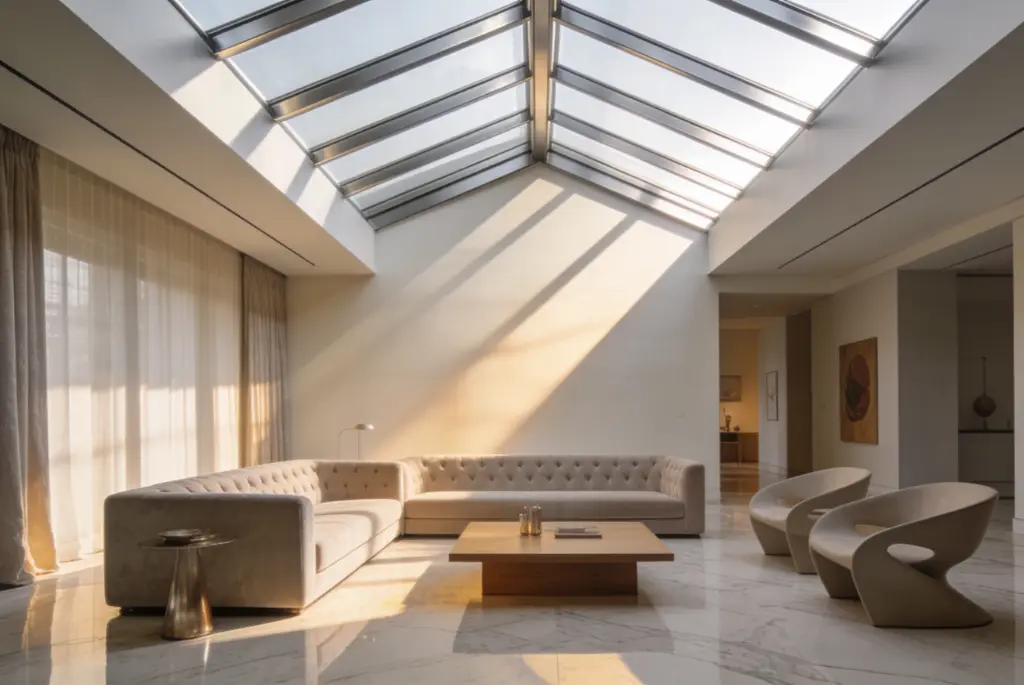
Ever notice how some rooms still feel dark and gloomy even when you flip on every single light switch? This usually happens in deep hallways, central stairwells, bathrooms, kitchens, or the far corners of a larger room. The solution isn’t adding more lightbulbs to the ceiling. What the space actually needs is real, natural daylight.
This is exactly where skylight systems come in handy. They open up a room to the sky, letting warm, natural light stream straight down from above. They also save precious wall space, which is incredibly helpful whether you are designing a compact home or a large commercial property. Modern skylight glazing systems make this overhead light highly comfortable to live with. High-quality glass filters the sun, cutting down on glare and preventing unwanted heat buildup. Instead of a room feeling hot or intensely bright, you get a space that feels soft, welcoming, and easy on the eyes.
A skylight does far more than just look nice. It completely transforms how a room feels throughout the day. With the right layout, any home, office, or storefront can instantly feel brighter, fresher, and far more inviting.
Let’s look into why these overhead systems matter so much, how natural light shifts our indoor experience, and what you need to consider when adding a skylight to your project.
Why Skylight Systems Matter in Modern Buildings
Great modern buildings need more than just solid walls and beautiful furniture. They rely heavily on natural daylight to feel alive. Without it, even a spotless, well-decorated room can start to feel flat and entirely closed off. That is why skylight systems are such a game changer. They deliver bright, functional light to the exact spots where regular side windows cannot reach. Long hallways, interior staircases, central kitchens, and deep indoor areas all completely transform when you introduce light from above.
They help elevate a property in a few very practical ways:
● More daylight: Interior rooms feel naturally illuminated for most of the day.
● Better feel: Sunlight naturally lifts the mood of a room, making it look vibrant instead of dull.
● Less wall use: Because the light comes through the roof, your walls stay completely free for shelving, artwork, or storage.
● Open look: Bringing light from above makes compact or narrow rooms feel noticeably larger.
● Daily comfort: It creates a functional environment that is much more pleasant to spend time in.
A well-planned skylight does not have to be overly complex or flashy. Its main goal is simply to provide the beautiful natural light that your room was missing.
How Skylight Systems Improve Natural Lighting
Natural daylight has a completely different quality compared to a artificial ceiling light. It wraps around a room, making surfaces look softer, textures richer, and layout designs feel more three-dimensional. Modern skylight glazing systems give you full control over that incoming light. The target is to maximize brightness while keeping out the intense solar heat and harsh glare that can cause eye strain.
The right choice of specialized glass solves several issues at once:
● Softer light: It diffuses the sun so the interior feels bright and evenly lit without harsh hotspots.
● Less glare: It filters intense afternoon sun, making it much easier to work on computers or watch screens.
● Heat control: High-performance coatings keep the indoor climate comfortable and balanced.
● Clearer view: Premium glass options keep your view of the moving clouds and blue sky crystal clear.
● Longer daylight: It captures usable natural light for more hours out of the day, even as the sun moves across the sky.
Smart glazing turns a simple opening in the roof into a highly practical feature, letting you enjoy all the perks of daylight while keeping your interior cool and comfortable.
The Impact of Skylights on Indoor Ambience
Adding a skylight can completely change the character of a room without changing anything else. The entire space instantly feels brighter, softer, and less boxed in. You notice this positive shift the most in areas that normally feel a bit neglected during the day. A narrow hallway suddenly feels like an open gallery. A kitchen feels refreshed and energetic. Indoor feels significantly cleaner, brighter, and more spacious.
Skylights shift the overall mood through a few simple effects:
● Open feel: Directing the eye upward makes your ceilings feel taller than they actually are.
● Soft mood: Natural shifting daylight feels much warmer and more comforting than static fluorescent tubes.
● Better focus: Workspaces, countertops, and desks become much easier to use under clear daytime light.
● Fresh look: Spaces feel inherently cleaner and more pristine when illuminated by the sun.
● Calm feel: Soft, balanced daylight creates a peaceful, relaxing environment.
It is a change you can feel the moment you walk into the room. Even with simple walls and minimalist furniture, a space blessed with overhead daylight instantly feels more alive.
Also read: Sound Insulating Windows: Quieter Spaces Made Simple
Planning Skylight Systems for Homes and Commercial Spaces
Installing a skylight requires careful, upfront planning. Creating a random opening in your roof can quickly lead to issues like excessive heat buildup, annoying glare, or potential weather leaks down the road. Where you choose to place the system matters just as much as how it looks from the inside.
In residential homes, skylights are incredibly effective in kitchens, common spaces, stairwells, and deep living areas where exterior wall windows cannot do all the heavy lifting. In commercial properties, they work beautifully to brighten up massive entry lobbies, long corridors, central atriums, and shared co-working spaces.
Here are the key details that need your attention:
● Room use: A kitchen requires excellent visibility without trapping too much cooking heat.
● Placement: The skylight must be angled to brighten the specific parts of the room where you need it most.
● Glass choice: The glass should actively manage incoming warmth and block out harsh glare.
● Ventilation: Opting for an operable skylight allows you to open it up and vent out trapped rising heat.
● Waterproofing: Using high-grade sealants and professional flashing ensures your roof stays completely tight and secure against the elements.
A successful skylight system should blend into the overall architecture perfectly, providing reliable light and steady comfort from morning to night.
Design Considerations for Long-Term Performance
A great skylight should not just perform well during its first week. It needs to stay safe, completely dry, and energy-efficient for decades. Achieving that long-term reliability comes down to the engineering behind the installation. The glass thickness, frame stability, roof slope, perimeter seals, and drainage channels all have to work as a unified system.
Make sure to focus on these crucial points:
● Glass strength: The panes must be durable enough to handle standard roof impacts and changing weather conditions safely.
● Heat management: The system should prevent the interior from feeling overly warm during peak midday sun.
● Water sealing: Premium perimeter seals are essential to keep out moisture and drafts.
● Drainage: The frame design must channel rainwater smoothly away from the glass edges.
● Frame quality: Utilizing premium, heavy-duty metal profiles, such as strong and lightweight aluminium, provides exceptional structural stability that will not warp over time.
● Cleaning access: The exterior should be easy to reach for routine inspections and occasional quick cleanings.
Taking the time to plan these structural details makes the system a joy to live with, keeping your space bright, secure, and perfectly comfortable for the long haul.
Final Thoughts
Skylights offer an elegant way to flood a building with natural light without relying on extra wall windows. They are the perfect remedy for dark interior corners, deep staircases, central kitchens, bathrooms, and expansive commercial workspaces.
However, a beautiful finish depends on careful execution. The glass needs to balance heat and glare, the framework must remain strong, the weather seals must stay perfectly tight, and the placement needs to target the darkest zones of the floor plan.
When you get these details right, your skylight will do much more than look impressive from below. It will make your entire interior feel open, fresh, and exceptionally comfortable every single day. When planned well, they stay useful for years.
FAQ:
Absolutely. Skylights are a fantastic addition to residential homes, especially in areas that do not get enough light from standard windows, like central stairwells, kitchens, common spaces, and interior hallways. They bring in beautiful daylight from above and make your living spaces feel much larger and more open during the day.
Only if the glass isn’t chosen correctly. By opting for advanced, high-performance glazing, you can easily control incoming heat and solar glare, keeping your room perfectly bright, cool, and comfortable even on clear, sunny days.
The best locations are spaces where regular wall windows cannot provide enough light. Deep interior rooms, long hallways, kitchens, and central office zones are all ideal candidates. Just remember to consider privacy needs, sun orientation, and proper weather sealing when picking the final spot.