
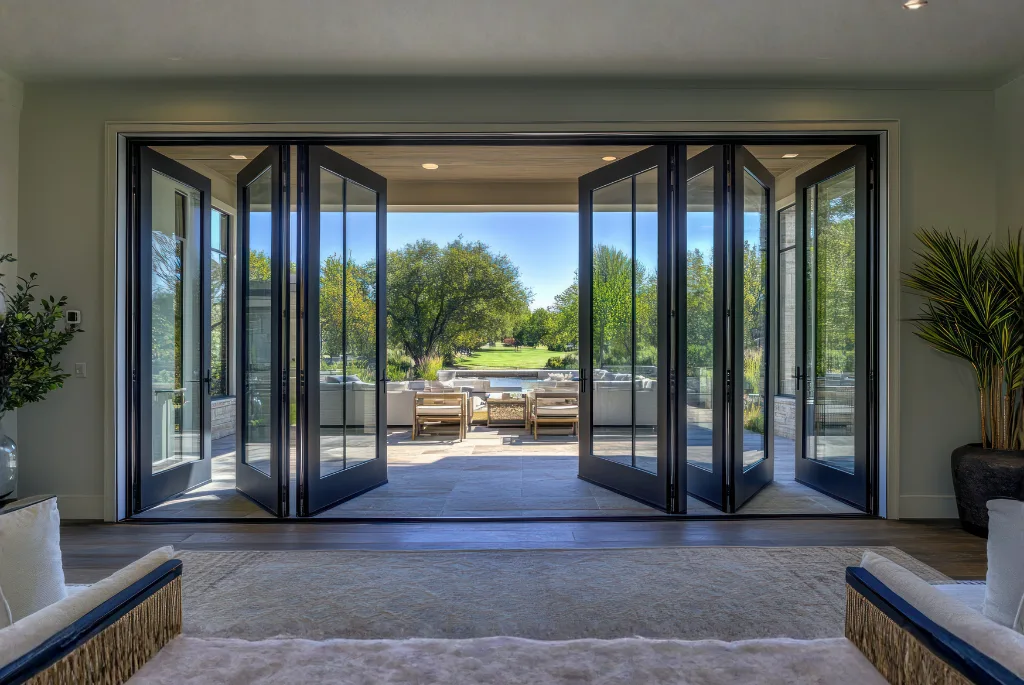
Aluminium door design didn’t start as a style decision. It began as a practical one. Builders liked the strength. Homeowners liked that it lasted. Over time, something else happened.
People began noticing how well aluminium fit into modern homes.
Today, a door is no longer just a closing point between spaces. It sits right in the line of sight. You see it when you enter. You touch it every day. That’s why aluminium door design now plays a role in how a home feels, not just how it functions.
What makes aluminium work is its restraint. The growing use of aluminium door glass has further strengthened this balance by bringing in light without adding visual weight. It doesn’t demand attention. Slim frames, clean edges, and solid construction allow it to blend into both small apartments and larger homes without looking heavy or forced.
How Aluminium Door Design Shapes First Impressions
The first thing most people notice about a home isn’t the furniture. It’s the entrance.
A well-thought-out aluminium door design sets expectations before anyone steps inside. It can make a space feel calm, structured, or open, often without the homeowner realizing why.
A few choices quietly influence this:
- Finish and color: Lighter shades disappear into the facade. Darker finishes add weight and contrast.
- Frame thickness: Slim profiles feel modern. Thicker ones feel more traditional.
- Opening direction: Even this affects how welcoming the space feels.
- Handle design: Something you use every day should feel right in the hand, not just look good.
Inside the home, aluminium doors are often used to divide spaces without closing them off. In open-plan layouts, this matters. Sliding or hinged aluminium doors help create boundaries while keeping light and movement intact. That’s one reason aluminium door design keeps showing up in modern interiors.
Aluminium Door Glass and the Way Homes Use Light
In many modern layouts, aluminium door glass is explicitly chosen to improve brightness while keeping spaces visually connected. Its clean integration with aluminium frames makes it practical without feeling decorative. Light changes how rooms are experienced. It always has. That’s why aluminium door glass has become such a common choice in modern homes. When combined with slim aluminium frames, glass allows light to move naturally between rooms or from outside to inside.
Different homes use aluminium door glass in different ways:
- Clear glass to extend sightlines
- Frosted or textured glass where privacy matters
- Patterned glass in family homes to hide everyday marks
- Tinted glass for subtle contrast without blocking light
When done well, aluminium door glass doesn’t feel decorative. It feels intentional. It supports the way the home is used throughout the day.
The Small Design Decisions That Define Modern Aluminium Doors
Modern aluminium doors are rarely about bold statements. They’re about control.
Aluminium allows designers to keep frames thin and panels large without sacrificing strength. That alone changes how doors sit within a space.
A few details that make a real difference:
- Clean, uninterrupted lines
- Hardware that feels solid, not oversized
- Finishes that match windows or interior accents
- Consistent proportions across multiple doors
These choices affect how the aluminium door design feels over time. A door isn’t admired once. It’s used constantly. When the design works, you stop noticing it, and that’s usually a good sign.
Where Design Meets Everyday Use
A door has to perform, not just look good. Aluminium supports this balance well. It doesn’t warp easily. It holds alignment. It keeps opening smoothly even with frequent use. That reliability lets designers focus on form without worrying about function breaking down later.
From a daily living perspective, the aluminium door design supports:
- Smooth operation year after year
- Lower maintenance compared to heavier materials
- Compatibility with insulation and security requirements
- Stable performance in different weather conditions
Modern aluminium door glass plays a role here too. Well-specified aluminium door glass helps manage heat, glare, and comfort, which is especially important in homes with large openings or frequent daylight exposure. Today’s glass options are built to manage heat and light better than older designs, which helps keep interiors comfortable rather than exposed.
What Homeowners Actually Look For in Aluminium Doors
Most homeowners aren’t chasing trends. They’re trying to make choices that won’t feel wrong a few years later.
When considering aluminium door design, a few priorities come up again and again:
- Durability: Something that still feels solid years later
- Adaptability: Doors that work as spaces change
- Natural light: A primary reason aluminium door glass is popular
- Comfort: Light without glare, privacy without heaviness
There’s also a clear move away from overly decorative styles. Many people prefer doors that feel current but quiet. Proportion, finish, and simplicity tend to age better than ornamentation.
A Quiet Presence in Modern Homes
Aluminium doors work because they don’t try too hard. They let light move where it should. They separate spaces when needed. They stand up to everyday use without asking for attention. A good aluminium door design becomes part of the background of daily life.
That’s why aluminium continues to find its place in modern homes, not as a statement piece, but as something reliable, understated, and thoughtfully designed.
FAQs
Most homeowners choose an aluminium door design for one simple reason: it stays reliable without looking heavy. Slim frames, clean lines, and long-term durability make it a natural fit for modern homes that value openness and low maintenance over decorative detailing.
It works well in both places. While aluminium door design is commonly used for main entrances, many homeowners now use it indoors, too. Internal aluminium doors help separate rooms without blocking light, which is especially useful in open or flexible layouts.
Yes, when glass is part of the design. aluminium door design often pairs slim frames with aluminium door glass, allowing more light to pass through rooms. The result is a brighter space that still feels comfortable and private, not exposed.