
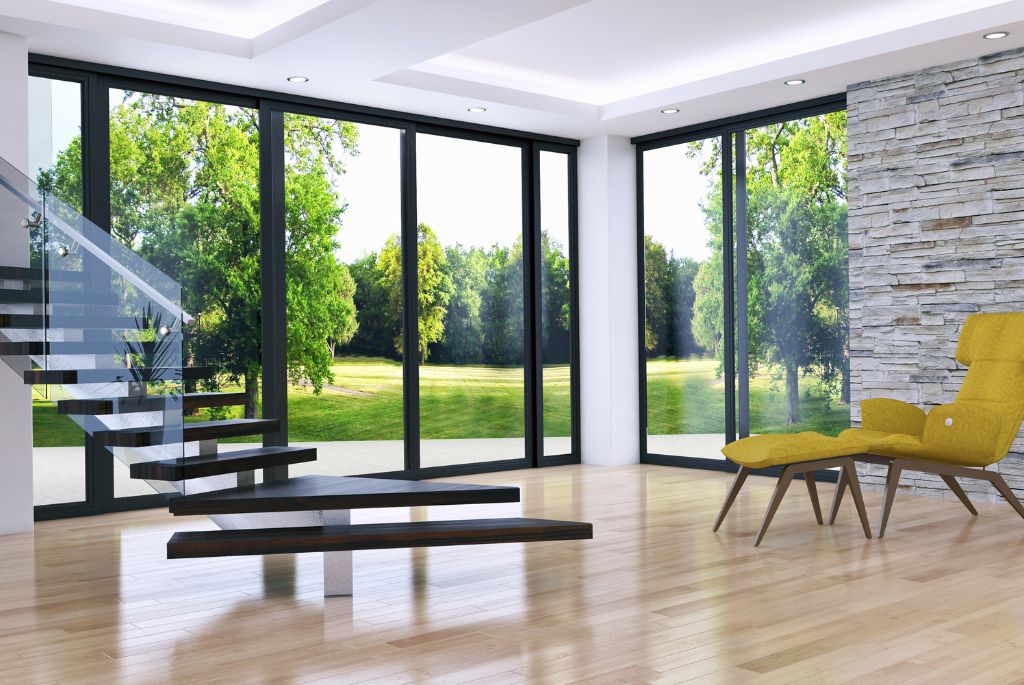
A room often reveals its limitations at the edges rather than at the center. Corners gather shadows, thresholds interrupt movement, and balcony doors, especially older ones-act more like barricades than gateways. When a boundary behaves this way, the entire space adopts its stiffness.
Aluminium bifold doors approach this problem from a different direction. Instead of asking walls to remain still, they invite them to rearrange themselves. When folded aside, the boundary dissolves into a compact stack, and the interior begins to recognise the outdoors as part of its field of influence. The change is immediate: broader light, clearer sightlines, and a sense that the home has regained a square metre it never physically lost.
Their function is not just mechanical; it’s spatial.
Why Aluminium Bifold Doors Are Becoming Popular
Homes built today operate under new pressures. Rooms must accommodate varied roles, work, leisure, care, conversation, and they must do this without expanding their footprint. A rigid opening often becomes the point of resistance. Aluminium bifold doors, by contrast, are designed to relinquish that resistance.
Several characteristics explain their acceleration in modern residential planning:
They stay true to form: Aluminium does not absorb moisture, does not change thickness in heat, and does not surrender to the slow distortions that mark older timber or low-grade frames.
They are visually disciplined: The slenderness of the profiles supports an architectural preference for clean vertical and horizontal lines. Glass takes precedence; the frame behaves almost like punctuation.
They fold with intent: Each panel moves along a controlled path, allowing the entire assembly to transform without intrusion. This appeals to homeowners searching aluminium bifold doors near me, not for dramatic effect, but for a tidy and predictable mechanism.
These traits, combined with the rising expectation for adaptable rooms, have positioned aluminium bifold doors not as a decorative option but as an architectural tool.
Benefits of Bifold Doors in Homes and Small Spaces
Compact homes often struggle with a sense of internal compression. The rooms are functional but lack extension, visually, spatially, and atmospherically. Aluminium bifold doors intervene precisely where these constraints begin.
- Light moves further than before: Slim frames allow daylight to stretch across the floor, flattening dark pockets and rebalancing the room.
- Furniture gains freedom: Without the sweep of a hinged door, arrangements become easier. The interior stops negotiating with the opening and starts acting according to function.
- Outdoor areas regain relevance: A balcony separated by a narrow or awkward door rarely becomes part of the home’s rhythm. A bifold opening, when fully retracted, turns it into a natural extension.
- Ventilation acquires a full route: Wide openings allow breezes to pass through without obstruction, something impossible with half-sliding doors that open only in fragments.
People comparing aluminium bifold doors prices often begin with cost but end up valuing these subtle improvements that alter daily use.
How Bifold Door Design Supports Indoor-Outdoor Living
Indoor-outdoor living relies less on the size of the exterior space and more on the fluidity of the threshold. When that threshold is narrow or fragmented, the transition feels reluctant. Aluminium bifold doors correct this by treating the boundary as an optional element.
Once folded, they create a continuous plane between inside and outside. Not enhanced, not dramatized-simply continuous. This continuity shifts perception: a modest balcony becomes an alcove; a terrace gains the status of a semi-room; a garden, even a small one, becomes a visible extension of the interior.
The effectiveness lies in how naturally the panels withdraw. Their retreat invites light, sound, and air to inhabit the same spatial narrative. Indoor-outdoor living, in this sense, becomes less about luxury and more about coherence.
Practical Considerations When Choosing Aluminium Bifold Doors
Selecting an aluminium bifold system is fundamentally about understanding how the space behaves.
- Panel count determines rhythm.
Two or three panels suit smaller spans. Larger openings demand more segments, but they must remain visually calm. - Folding direction must follow circulation.
Panels should rest where the room absorbs them naturally, not where they interrupt movement or furniture placement. - Threshold design influences experience.
A low threshold creates continuous movement; a raised threshold offers stronger protection in climates exposed to rainfall. - Glass specification shapes comfort.
Double or performance glazing strengthens insulation—thermal and acoustic. In warm regions, this directly relates to aluminium door price in UAE evaluations. - Hardware quality defines longevity.
Rollers and hinges should operate with minimal friction. Over time, their engineering becomes more significant than the frame material itself. - Installation accuracy completes the system.
A bifold door behaves only as well as its alignment. Precision during installation determines ease of use.
These decisions must respond to the site, the climate, and the daily patterns of the household.
Versatile Applications of Aluminium Bifold Doors in Modern Homes
Because aluminium bifold doors redefine boundaries rather than decorate them, they adapt to varied architectural situations:
- Living areas: They enable rooms to transition between intimate and expansive modes.
- Kitchens: Airflow and visibility improve, creating a more hospitable working environment.
- Interior partitions: They divide large spaces without interrupting daylight or sightlines.
- Bedrooms with modest balconies: A quiet outdoor space becomes accessible and relevant.
- Workspaces within homes: They enclose sound and focus when required, and open fully when transparency is preferred.
- Garden edges: Even narrow garden strips carry more presence when connected through a foldable opening.
Each application demonstrates the same idea: a boundary that can vanish adds depth to an otherwise fixed plan.
FAQs
Aluminium remains dimensionally stable under heat and resists corrosion, making it dependable in both hot and coastal environments.
They require minimal maintenance. Cleaning tracks and occasional frame care generally sustains long-term performance.
Yes. Aluminium systems can be fabricated for compact spans, allowing two- or three-panel configurations to function effectively.